
From Renter To Owner: 8 Important Reminders Before Making The Transition
If you're renting now, you most probably dream of having your own house one day. In fact, you’re probably already looking into buying a property to your name right now. So aside from finding that…
If you're renting now, you most probably dream of having your own house one day. In fact, you’re probably already looking into buying a property to your name right now. So aside from finding that perfect dream home, what else do you have to prepare for in buying your own place of residence? Here are 8 important reminders before making that renter-owner transition:

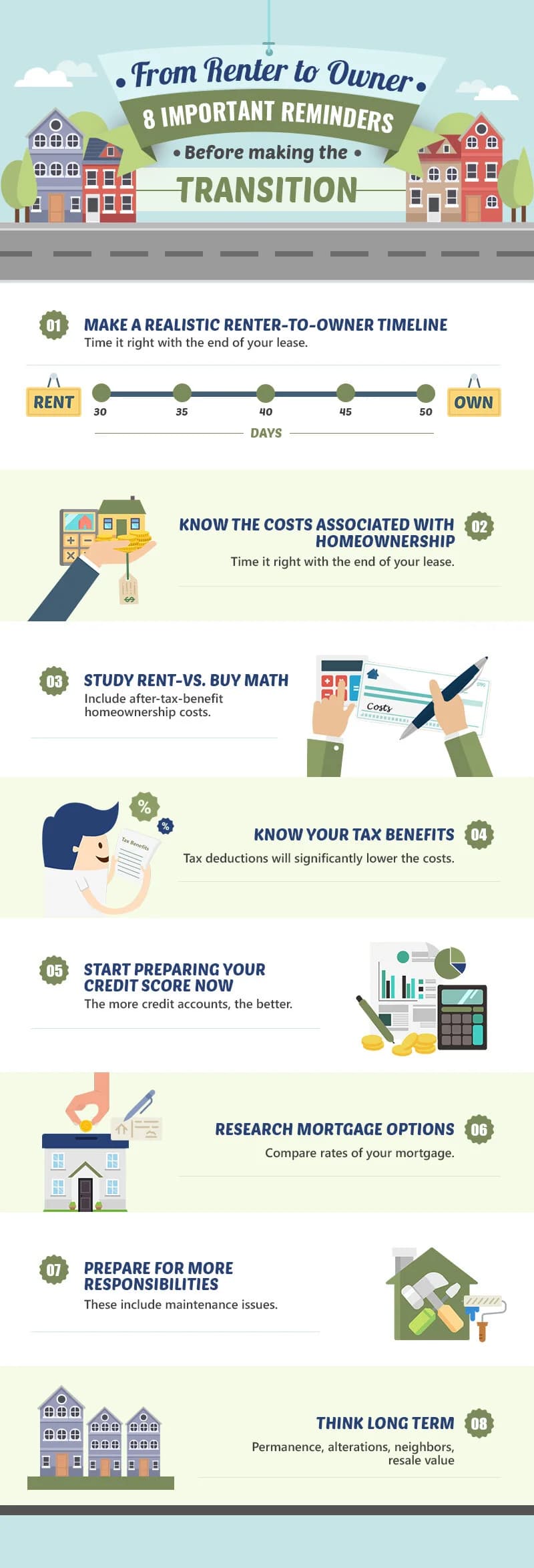
1. Make a Realistic Renter-to-Owner Timeline
After the tedious task of searching and even after your seller accepts your offer, you may think that the job is done. You're move-in ready! Not just yet. Be reminded that it may take around 30-50 days to close a home. You have to make sure that you time it right with the end of your lease. You don’t want it to be a renter-homeless-owner story!
2. Know the costs associated with homeownership
Costs, costs, costs! There’s a lot more to pay for upfront than just a security deposit as a renter—from deposits, home loan origination, title insurance, land surveys, home inspection, insurance escrow, appraisal, among others. Then, of course, you have to consider mortgages, home association dues, etc. in the long run.
3. Study Rent-vs. Buy Math
More costs mean more math. This will be more than just rental payment vs. P.I.T.I. A more accurate comparison will also include after-tax-benefit homeownership costs and rent costs.
4. Know Your Tax Benefits
With all these costs, don’t worry, your tax deductions will significantly lower the costs of homeownership. Mortgage interest and property taxes will be deductible in filing annual tax returns, and reduce your taxable income.
5. Start preparing your credit score now
In getting the best mortgages, credit scores are very important. Those who lend want reliable and on-time payers, after all. If you only have one credit card, start getting more now, while you have time to grow your credit score. More credit accounts are seen as better.
6. Research mortgage options
You can’t only shop for the best-fitting home for you, but also the best-fitting lender too. Compare rates of your mortgage based on your loan type, location, purchase price, down payment, and as mentioned earlier, credit history.
7. Prepare for more responsibilities
These include maintenance issues from the roof of your home down to its very foundation. Set up insurance and even an emergency fund for these responsibilities.
8. Think long term
Consider the fixed features of the home such as location, think of the things you may want to alter in the long run, even take note that the neighbors you will have in this new home may be your neighbors for life, and if need be, think about the property’s resale value.
Related Articles

Can You Work With Multiple Real Estate Agents at the Same Time?
When you're buying a home, it can be tempting to think that working with several real estate agents will give you a huge advantage. More agents could mean more listings, more connections, and more…
Here's One Thing Most Home Buyers Forget to Budget For: Landscaping
A stunning yard, with its fresh lawn, lovely trees, and colorful flower beds and gardens, can absolutely boost curb appeal and home value. These features help create a powerful first impression to…
Understanding Cash to Close When Purchasing A Home
Even before starting your home-buying journey, you're probably already aware that the numbers aren’t just about the home’s purchase price and your down payment. There are dozens of smaller fees…